

Water Conservation
Sensor faucets have been introduced in public toilets, with further implementation continuing across the hospital.


Safe Care. Responsible Resources. A Resilient Future.
Supporting sustainable healthcare, environmental responsibility and climate resilience.
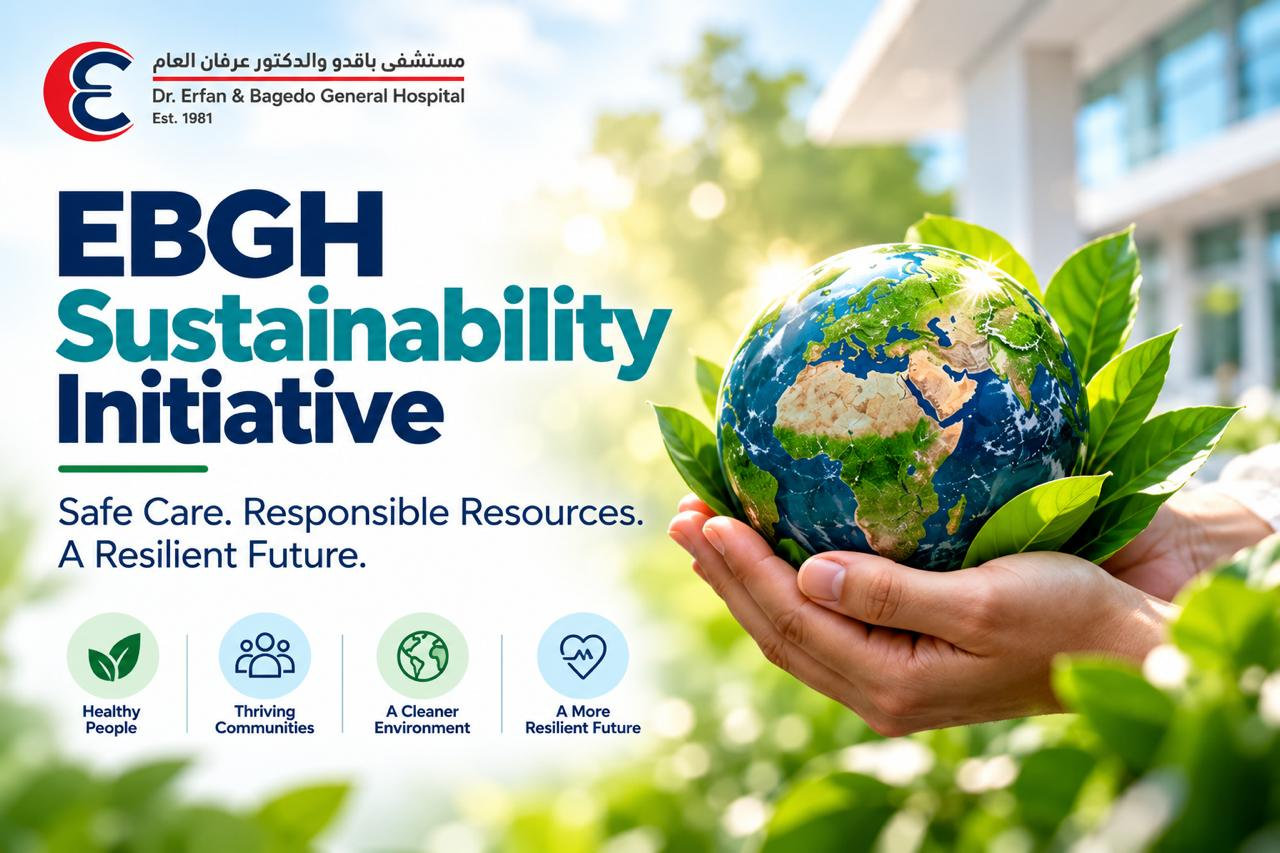
At Dr. Erfan & Bagedo General Hospital (EBGH), sustainability means delivering safe, high-quality healthcare while using resources responsibly, reducing unnecessary environmental impact, and strengthening our ability to respond to environmental and climate-related challenges.
Our structured sustainability journey began in 2025, bringing together clinical care, hospital operations, environmental responsibility and organizational resilience under one hospital-wide approach.
Through our Environmental Management System (EMS), sustainability is being integrated into hospital planning, daily operations, staff education, procurement, resource management, risk management and continuous improvement.
Climate change can affect human health directly and indirectly through extreme heat, severe weather, changing disease patterns, air quality, water availability and disruption of essential services.
Hospitals therefore have a dual responsibility: to remain resilient enough to protect and care for communities during environmental and climate-related challenges, while reducing the environmental impact associated with healthcare delivery.
Healthcare consumes energy, water, medicines, medical supplies, food, chemicals and many other resources. It also generates waste and greenhouse-gas emissions.
For EBGH, sustainability therefore means:
Better care responsible resource use less unnecessary waste stronger resilience.
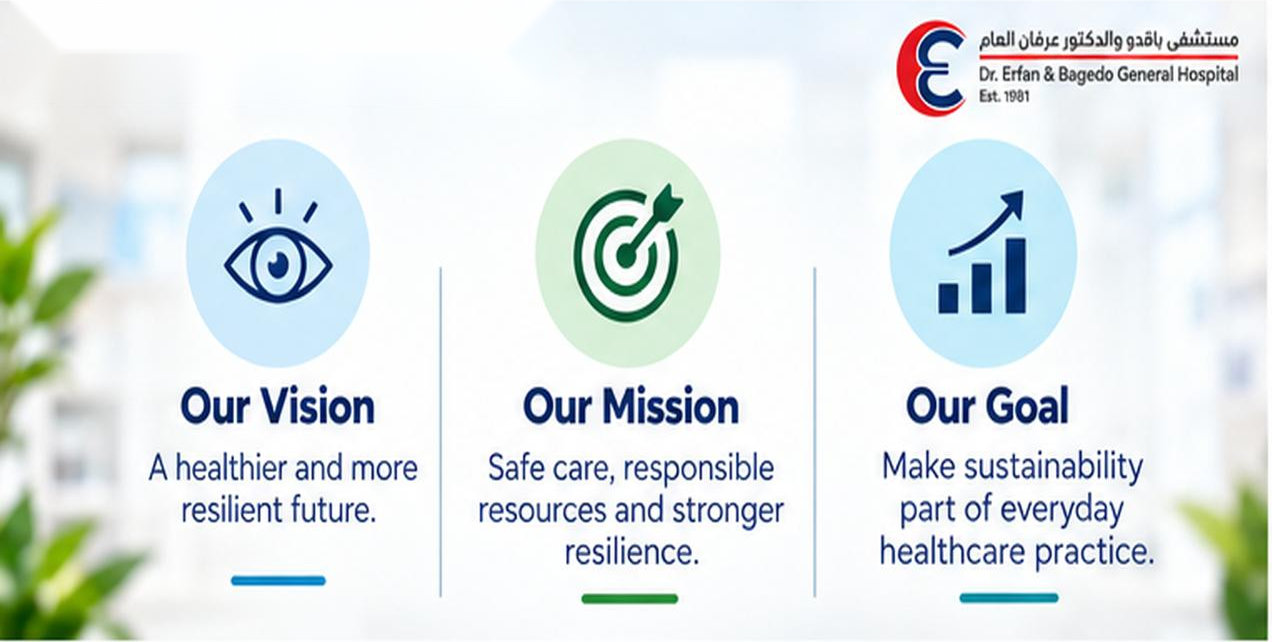
To build a healthier and more resilient future by embedding sustainability into the way we deliver healthcare, operate our hospital and serve our community.
To provide safe, high-quality healthcare while using resources responsibly, reducing unnecessary waste and environmental impact, engaging our people, and strengthening the hospital's resilience to environmental and climate-related risks.
To make sustainability part of everyday healthcare practice - from clinical decisions and resource use to procurement, facility management, waste reduction, staff engagement and climate preparedness - while protecting patient safety at all times.
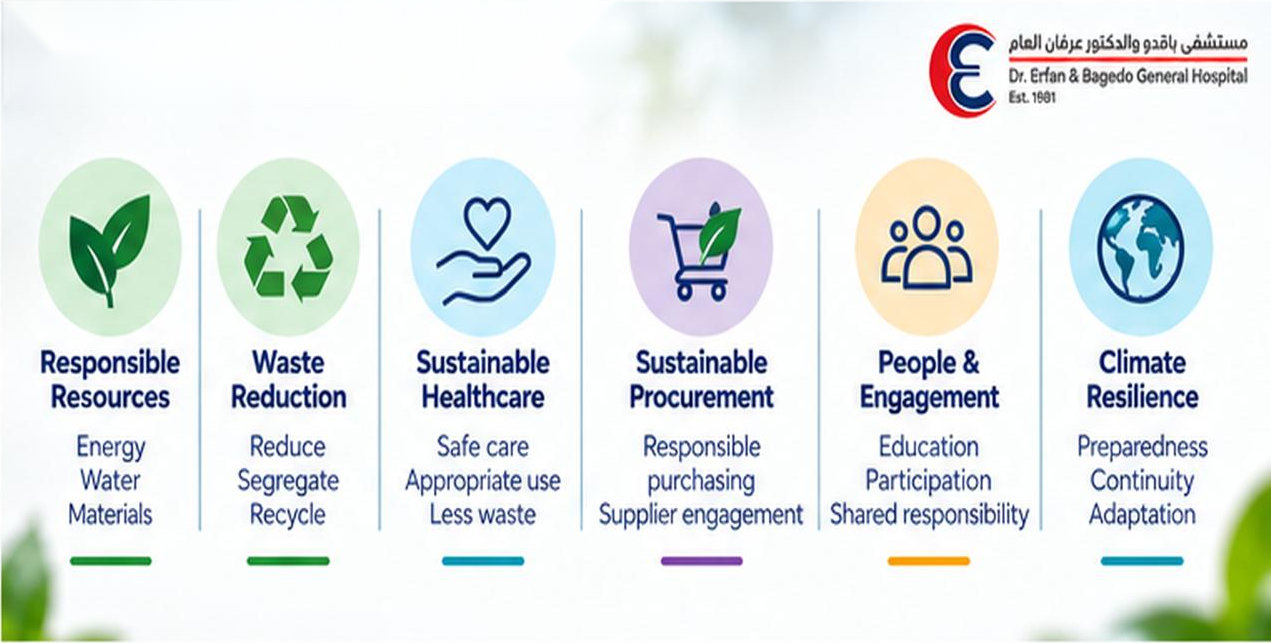
Energy • Water • Materials
Reduce • Segregate • Recycle
Safe care • Appropriate use • Less unnecessary waste
Responsible purchasing • Supplier engagement • Life-cycle consideration
Education • Participation • Shared responsibility
Preparedness • Continuity • Adaptation
From Commitment to Action
Sensor faucets have been introduced in public toilets, with further implementation continuing across the hospital.

Sensor-controlled lighting has been introduced in selected areas to reduce unnecessary energy consumption.
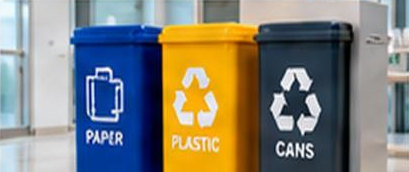
Dedicated recycling stations support the segregation of paper, plastic and cans.

Awareness initiatives encourage staff to reduce unnecessary use of medicines, clinical supplies, PPE, linen, laboratory resources, paper and other materials - without compromising clinical requirements.

Electronic communication, digital approvals, document sharing and other digital solutions help reduce unnecessary printing and resource use.

Sustainability education has been incorporated into staff awareness activities, Continuing Education and new-employee orientation.
Environmental and sustainability considerations are being incorporated into procurement and supplier evaluation.
Energy, water, waste and other sustainability indicators are progressively monitored to support measurable improvement.
The EBGH Sustainability Initiative supports implementation of the Joint Commission International (JCI) Global Health Impact standards, strengthening the connection between healthcare quality, environmental sustainability and climate resilience.
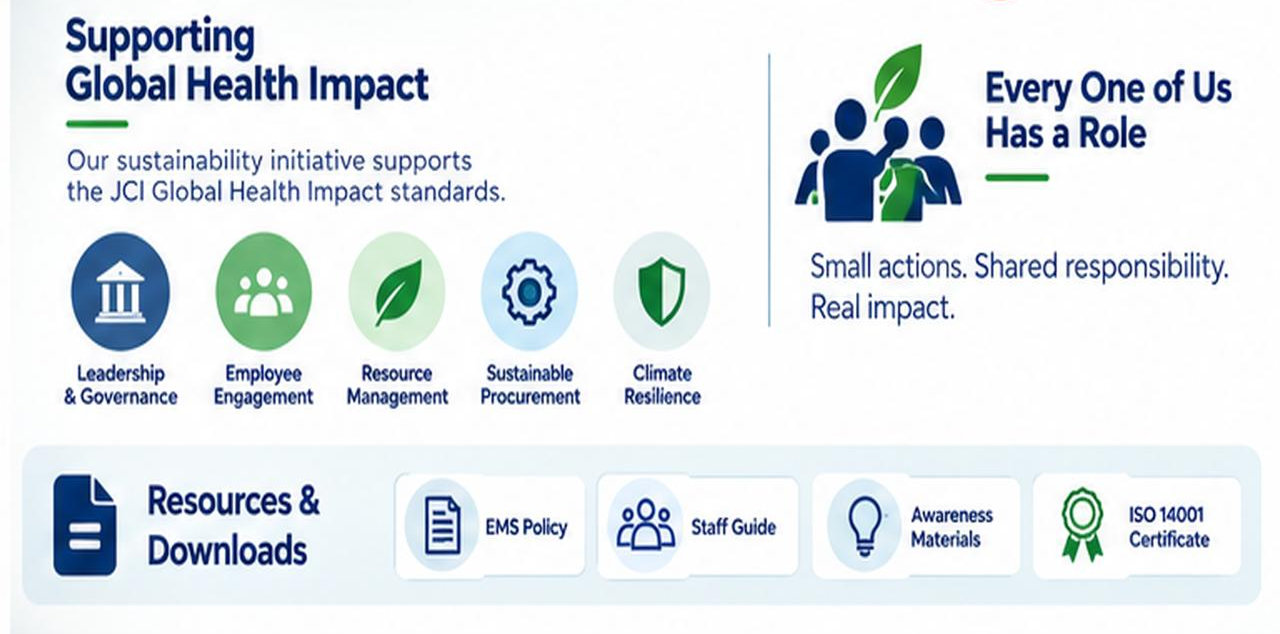
Planning, leadership oversight, measurement and reporting.
Education, awareness, participation and shared responsibility.
Energy, water, waste, materials and environmentally responsible operations.
Integrating sustainability considerations into purchasing and supplier management.
Understanding environmental risks and strengthening healthcare preparedness and continuity.
For EBGH, sustainability is not a separate environmental activity. It is part of responsible healthcare.
Small Actions. Shared Responsibility. Real Impact.
Sustainability is created through thousands of everyday decisions.
Before we order, open, prepare, print, use, repeat or discard, we can ask:
Is it needed? Is it safe? Is it the right amount? Is there a better way?
Patients, healthcare professionals, employees, suppliers and partners all have a role in creating more sustainable healthcare.
Every action matters. Every resource matters. Every one of us has a role.
We welcome ideas from our staff, patients and community that can help reduce waste, conserve resources and improve sustainable healthcare practices.